DEF

Menu Contact

Failure Analysis & Troubleshooting

Transformer Health & Assessment

When Something Goes Wrong — Act Fast, Act Right

Unexpected transformer issues can lead to costly downtime, safety risks, and long-term damage if not addressed properly.

At Reactance, we provide independent failure analysis and troubleshooting support to help you quickly understand the problem, identify root causes, and take the right corrective actions.

Whether you are facing abnormal operation, test deviations, or early signs of failure — we help you make informed technical decisions under pressure.

Typical Situations We Support

We assist clients in resolving critical issues such as:

  • DGA Anomalies: Unexpected gas generation and abnormal gas ratios.
  • Overheating: Hot-spot concerns and thermal anomalies.
  • Insulation Issues: Insulation degradation or partial discharge.
  • Loss Deviations: Abnormal losses or efficiency deviations.
  • Test Failures: Failures during FAT or site commissioning.
  • Recurring Problems: Operational issues with unclear origin.

Our Approach

1. Rapid Technical Assessment

We start with a structured review of all available data:

  • Test Reports: FAT, routine, and special test documentation.
  • DGA Interpretation: Gas analysis results and trends.
  • Design Documentation: Engineering drawings and calculations.
  • Operational History: Incident data and loading records.

Impact: Clear picture of the situation and potential risk level.

2. Root Cause Analysis

We go beyond symptoms and identify the real source of the problem.

  • Multi-Factor Correlation: Correlation of electrical, thermal, and mechanical factors.
  • Cause Identification: Design, manufacturing, or operational root causes.
  • Engineering Validation: Simulation and calculation where needed.

Impact: Understanding why the issue occurred — not just what happened.

3. Engineering Evaluation & Risk Assessment

We assess the impact on reliability and future operation:

  • Severity Assessment: Severity and progression of the identified issue.
  • Failure Risk: Risk of failure escalation or unplanned outage.
  • Remaining Lifetime: Remaining lifetime considerations and end-of-life risk.

Impact: Clear risk-based decision support.

4. Corrective Actions & Recommendations

We provide practical, actionable guidance:

  • Immediate Mitigation: Urgent measures to stabilize the situation.
  • Repair Strategy: Repair or modification strategies.
  • Monitoring Plan: Monitoring and follow-up recommendations.

Impact: Clear path forward — technically and operationally.

What This Means for You

  • Faster Decisions: Faster decision-making in critical situations.
  • Cost Control: Avoid unnecessary repairs or replacements.
  • Reduced Downtime: Minimize operational risk and unplanned outage.
  • Independent Validation: Technical validation of next steps from an unbiased expert.

Why Independent Analysis Matters

In failure situations, relying solely on internal teams or suppliers can lead to:

  • Biased Conclusions: Assessments influenced by commercial or internal interests.
  • Incomplete Root Cause: Symptoms addressed without finding the underlying cause.
  • Suboptimal Decisions: Overly conservative or unnecessarily costly solutions.

An independent expert brings:

  • Objective Assessment: Unbiased evaluation based solely on technical facts.
  • Cross-Industry Experience: Insights from diverse transformer types and failure modes.
  • Fact-Based Approach: Focus on evidence, not assumptions or commercial interests.

By engaging experienced specialists, you ensure that decisions are based on a clear technical understanding — helping you avoid unnecessary expenses, minimize downtime, and resolve the issue right the first time.

Download technical profiles and
explore our engineering track record.
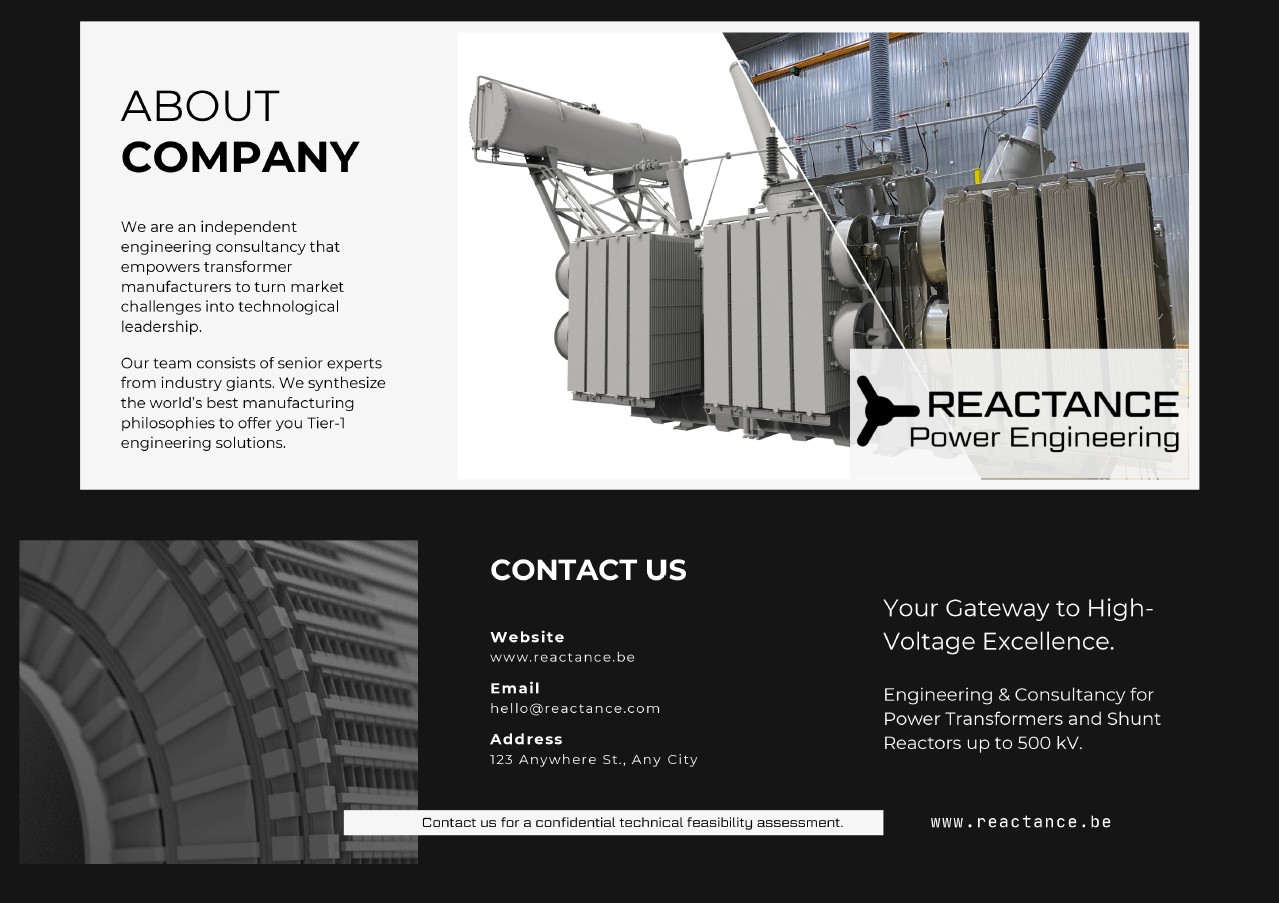
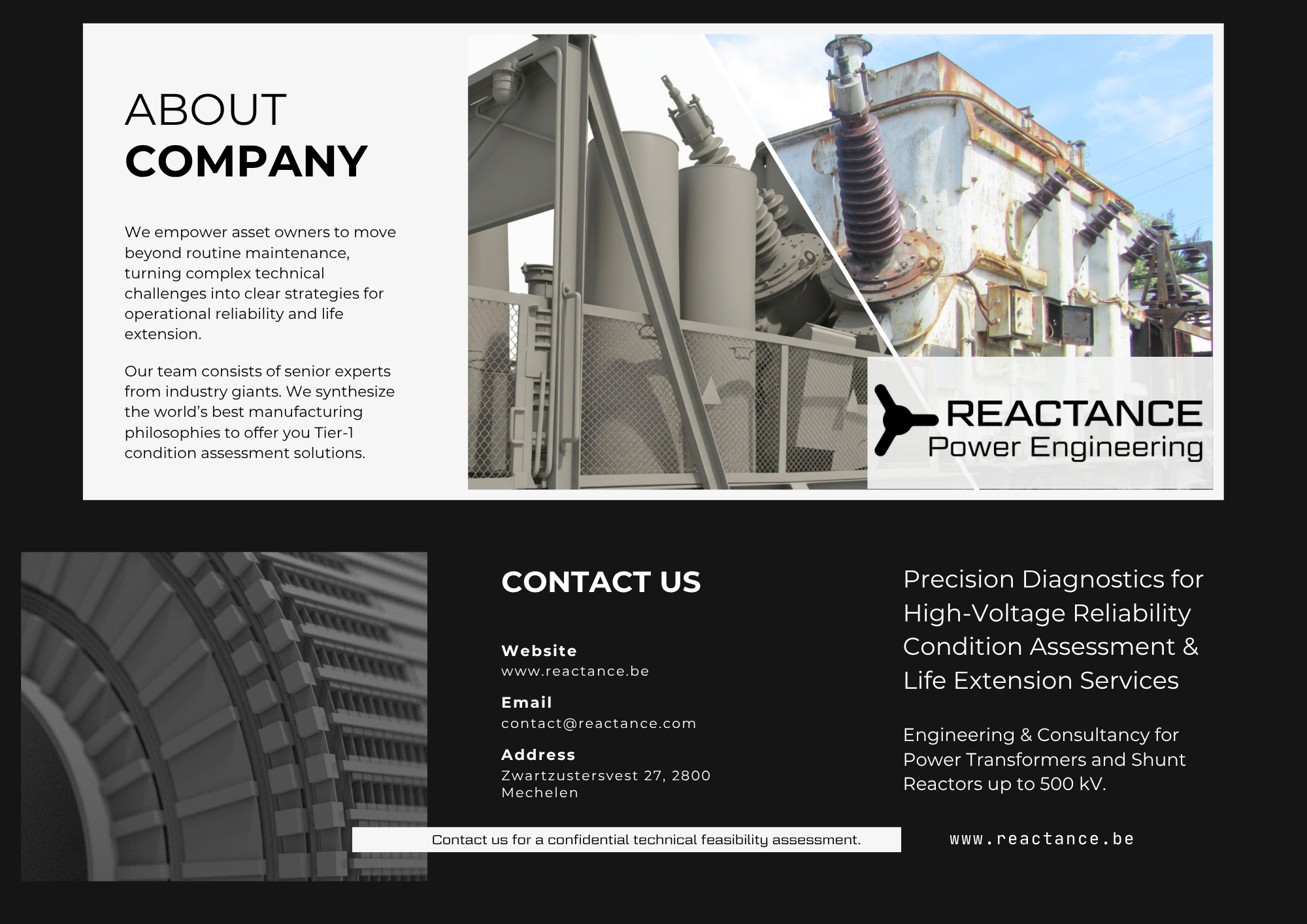
Engineering Brochure cover
Service Brochure cover
Design Portfolio cover
Assessment Case Studies cover

$ get in touch

> contact@reactance.be

> +32 470 23 23 32

> Mechelen, Belgium

> imprint | privacy | terms

_

© 20?? Reactance